An AI Agent is an autonomous software system powered by AI (typically large language models or LLMs) that perceives its environment, reasons/plans, uses tools, takes actions, and pursues goals with varying degrees of independence on behalf of users.
Unlike traditional software (rule-based and deterministic) or basic chatbots/Generative AI (reactive, prompt-driven content creation like text, code, or images), AI agents are proactive and agentic. They break down complex, multi-step tasks, maintain memory across interactions, call external tools/APIs/databases, adapt based on feedback, and execute workflows with minimal ongoing human input.
Core Components of AI Agents
- Reasoning/Planning Engine — Often an LLM that thinks step-by-step (e.g., ReAct pattern: Reason + Act).
- Memory — Short-term (conversation context) and long-term (knowledge base or vector stores).
- Tools — Integrations for web search, code execution, APIs, email, calendars, etc.
- Orchestration — Frameworks like LangGraph, CrewAI, AutoGen, or emerging protocols (MCP, A2A) for single or multi-agent systems.
- Evaluation & Feedback Loops — For reliability, safety, and improvement.
Trend or Tech Revolution?
It’s both a strong trend and a foundational shift toward the next phase of AI, often called the move from “Generative AI” (content creation) to “Agentic AI” (autonomous action).
- Trend aspects > Massive hype in 2025–2026, with vendors labeling many things as “agents.” Market projections show rapid growth (e.g., significant CAGR toward tens of billions by 2030). Adoption is accelerating in enterprises for automation. Many early agents are still brittle, require heavy orchestration, and need human oversight (“human-in-the-loop”).
- Revolution aspects > Agents promise to transform work by acting as “digital coworkers” that handle complex, multi-step processes, integrate with tools/systems, and scale productivity. 2026 trends point to multi-agent systems, better safeguards, production deployments, and integration with physical/robotic systems. This builds on GenAI but shifts AI from a tool you query to a collaborator that executes. Experts see it as evolving how software is built, businesses operate, and developers work
It’s not AGI (artificial general intelligence), but a practical evolution that amplifies human capabilities. Success depends on good design, evals, security, and realistic expectations: many pilots will fail without strong engineering practices. For developers, it’s a high-leverage skill area right now.
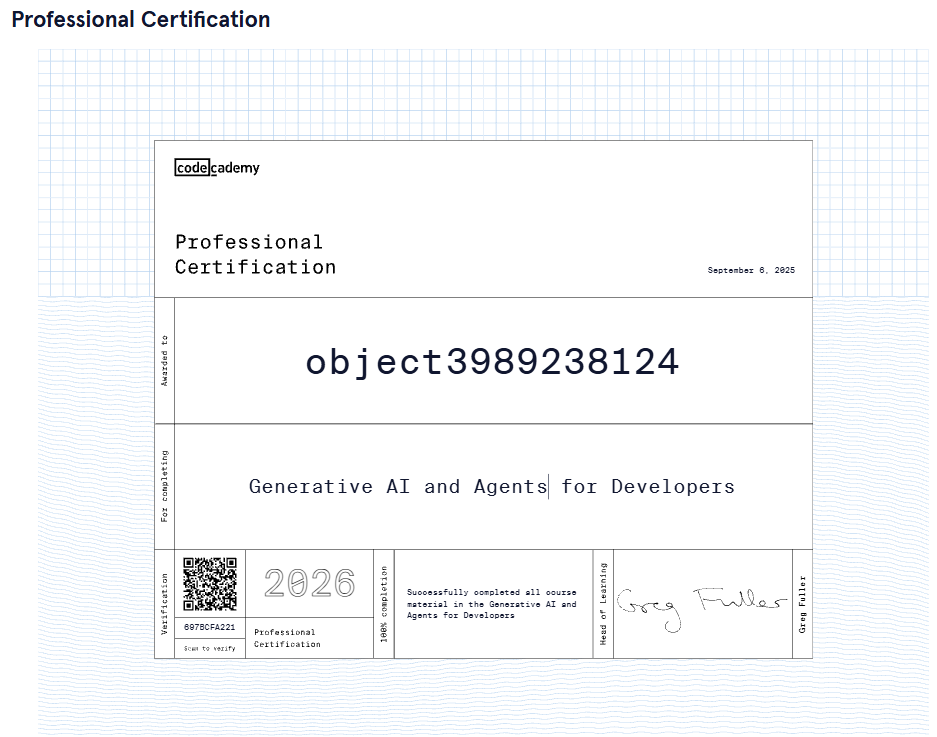
Concrete Feedback on the “Generative AI and Agents for Developers” Bootcamp (Aug 2 – Sep 6, 6 Weeks)
A focused 6-week bootcamp is an excellent format for developers. It provides enough time to move from foundational prompting and LLM usage into building functional agent prototypes while keeping momentum high.